viernes, 8 de octubre de 2010

Stress

Hi everybody

In this blog I going to talk about stress.


Stress is the automatic and natural response of our body to the situations that are threatening or challenging. Our life and our environment, constantly changing, require us to continually adjusted, so a certain amount of stress (activation) is necessary.

The most common signs of stress are: anxiety, irritability, fear, fluctuation of mood, confusion, agitation, excessive self-criticism, difficulty concentrating and making decisions, concern for the future, repetitive thoughts, excessive fear of failure, some physical changes such as muscle made, cold or sweaty hands, headaches, back or neck problems, sleep disturbances, fatigue, shortness of breath or palpitations.

External events stressors aren´t always noticeable and intense, but can "accumulate" in effect until we reached the limit. The way we interpret and think about what happens to us affects our perspective and experience of stress. So often it is our interpretation that generates (or power) a negative reaction to stress, rather than the event or situation that we face.

During the university years the main factors contributing to stress are usually related to: leave your home, having to commute for miles, share a flat or live alone, in addition to meeting academic responsibilities, the classes and personal relationships. To this must be added sometimes positive events, like falling in love or to prepare a study tour, although we also welcome to add some tension. In these situations is when more difficult for us relax or take away from them.


Strategies to cope with stress seek to prevent or control the excesses in the demands of the environment or ourselves. In cases where the situation that causes us stress is inevitable, the challenge is to address the situation as healthy as possible, some effective strategies are: rest, exercise, maintain a healthy diet, manage their time, sharing emotions, among others.


jueves, 7 de octubre de 2010

One in four youngsters 'not using contraception'

Hi !
This post is a summary about a article of the guardian newspaper.
A survey of the world by Marie Stopes International for Contraception Day on December 26 revealed that one in four U.S. sexually active young people fail to use any form of contraception with a new partner, this figure makes called on the government to provide sex education in schools is a matter of priority.
The results of this survey revealed that 16% of young people admitted having unprotected sex to said they had forgotten to use contraception with a new partner, 13% said not their preferred partner to use it and 19% said they failed to take precautions because they were drunk.
Is for this that Tracey McNeill, vice-president of UK and Europe at Marie Stopes International, said: "We are calling on the coalition government to put sex education and relationships back on the agenda and ensure all schools, including faith schools, teach a standardised curriculum to 15 year olds”.

This survey also revealed that more than half of the respondents had already had their 18th birthday by sex and the government's own data shows, 83% are sexually active by the same age. This shows that it is very important to the delivery of sexual information in the different schools to youth who have not yet begun their sex lives.

In addition McNeill refers to the importance of sex and relationships where education is taught in conjunction with contraceptive information, more young people practise safe sex, this is very relevant, since 32% of young people in the UK said sometimes they felt the different confused about contraception options and did not know was which method best for them and their partner. A total of 19% believe the "withdrawal method" is an effective contraception.

The importance of providing sexual information at an early age is to avoid unwanted pregnancies and the risk of acquiring sexually transmitted infections.

Here is the link of the article:
http://www.guardian.co.uk/society/2010/sep/20/youngsters-contraception-sex-education

sábado, 11 de septiembre de 2010

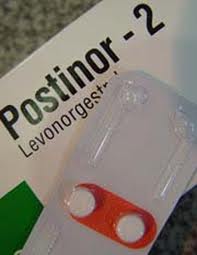
Levonorgestrel

The presentation of Dr. Valenzuela about " Postovulatory effects of levonorgestrel in emergency contraception " seemed to me to be very interesting, because I didn´t have many knowledge on this topic, and after having read his paper I had still had some doubts, which I could solve in the talk that it gave last Thursday, in addition during the talk it clarified some concepts that me were of great help to be able to understand better the topic that the doctor was speaking.

The talk was very good for us, as futures Midwives, since it helps us to know more on the topic of the contraceptives, topic that it is very important in our career, especially to be able to educate our future patients on his use, his effects and more even for the familiar planning.

I had listened on several other contraceptive tablets, but not the levonorgestrel; in the talk I learned on the effects postovulatorios of this tablet, which two doses manage the affairs post-coitus and which the probability of efficiency is diminishing as he manages the affairs more lately. In addition I learned that every day between the coitus and LNGE's administration is one day that removes itself him to the window of fertility of the cycle of fecundity of the woman.

According to the vision of the Dr. Carlos, the levonorgestrel used as emergency contraceptive increases the risk of ectopic pregnancy when there fails as contraceptive, which we him should report to our patients and that therefore shouldn´t be in use for situations so delicate as the violation or the emergency contraception.

I am very grateful that give themselves these instances of learning, since it helps us so much to increase our knowledge in the diverse topics of which we treat like to increase our medical vocabulary.

Sicko: A deep look into the health system in the United States


Hi everyone!!!


I´m going to talk about my impression of the film seen on Tuesday, Sicko, directed by Michael Moore. In my opinion this documentary shows very clearly how are the different health systems in different countries.

I was quite impressed on how the health system in the U.S.A. Doesn´t falls on my head, how people having health insurance doesn´t cover them so many diseases that can suffer and that if not treated on time can lead to death. I don´t understand how people having retirement age, have to keep working the rest of his life to buy the medicine, or their country people have to travel to another, to receive better quality care.


I was impressed when he mentioned the movie that doctors with more denials of interventions are most rewarded by insurance, then I wonder: these doctors have real vocation or only care about the money you earn?
I was also impressed when he alluded to insurers reject people because they are very obese or very thin, without being at all extreme cases. I also called attention to how when a person who needs an expensive transaction, the companies rummage automatically and by systems in their health history and take advantage of anything to say that you are withholding information and deny the service.


I can´t understand how could they be so insensitive to the point of deceiving people by telling them that they had no tumor, being that it was true and that lack of attention the sick many die.


I was quite surprised to see how was the health system in England, I don´t know much about these issues, but I didn´t know I could have, somewhere, a health system as having a country where health care is free all and the doctors get bonuses if they manage to change a bad habit of patients or if they can, for example, that their patients lower cholesterol levels. Here health indices are much higher than in the U.S.A., people have a better quality of life and they don´t live with afraid of getting sick from not having money or a health system that covers their diseases.


This documentary seemed great; I think that as future health professionals must be willing to give our best to people who need it most.

martes, 24 de agosto de 2010

My favorite book


One of my favorite books is "Perfume". It tells the story of a man, who had an excessive development of smell and a lack of body odor what led him to become a murderer with only one goal: to create the most exquisite human perfume. This obsession led him to commit the most heinous crimes known to date in order to extract the most exquisite fragrance of the bodies of his victims leading to an ending so unexpected and surprising. I leave the doubt for you to read the book and know how the end of this interesting character is.

I love this book, because it is not like the others that talk about similar issues. From my point of view, this book breaks schemes and invites you to enter into a world unexplored by others: the world of smells.

I remember I had to read this book when I was studying in high school, and then I had to take a test. At first, I thought I would find it boring as the other books that I had to read at school, but while I was reading, I had the urge to know what happens to this mysterious character and wanted to know how and why he finally became a murderer and reach the end of this novel.

After reading the book I saw the movie. It is a good film, but for me it does not cover all the details recounted in the book, details that make the book more interesting and attract your attention even more.

I recommend “Perfume” by Patrick Suskind, because as soon as you start reading it you won’t wait to finish it, in order to know the end this exciting story.

jueves, 1 de julio de 2010

English classes: a good experience


English classes I like a lot, I think little by little I increased my vocabulary in this language and the idea of do “listening” is very good because it allows to sharpen our ears and be able to understand when others speak to us in English. In my school, the English class I remember we did not make many of these activities and most of the test consisted of written questions to answer, sometimes we were reading texts of some books and contests spelling words dictated by the teacher, but we did not speak much English.

I think that in the English classes these years we have reinforced enough to hear this language. Also, I like this course, because we read articles related to your career and this, in addition to inform us about many interesting topics, to learn medical vocabulary, learn to read articles on this language, which for me is difficult to understand. Another thing we do in class and I consider important for our training in this area, is that we do in English class with a teacher who proves to be an expert on the subject, I find this essential because, on one hand we have to understand or interpret the meanings and learn new words and also learn to say them.

With this course I feel that, even though it costs me to speak and understand this language, I learned about this and I have increased my vocabulary a bit, for which I´m very happy, because to be honest, at first believed that this course would not help me a lot, because I don´t know much of this language.

I am very grateful to have this subject, and also very grateful to the teacher, who has had a lot of patience to teach.